
**Sign the petition: Don’t Let Nebraska Become a CO2 Waste Dump**
Top Reasons to Oppose CO2 Injection Wells in Nebraska:
- Property Rights
- CO2 Leaks and Safety
- Drinking Water Endangerment
- Aquifer Contamination Risks
- Increased Energy Costs
- 45Q Tax Credit $$$ Giveaway
The “Carbon Capture” Scheme
- Corporations seek to acquire “pore space” underneath landowners’ property to inject CO2 under their homes using state laws that provide even *fewer* protections than eminent domain land seizure
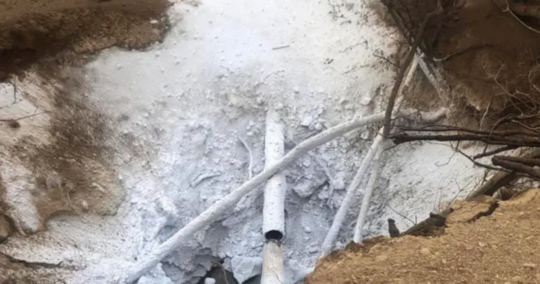
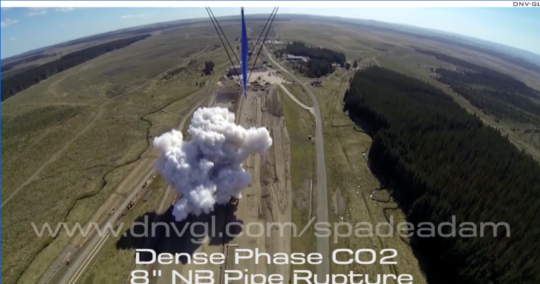
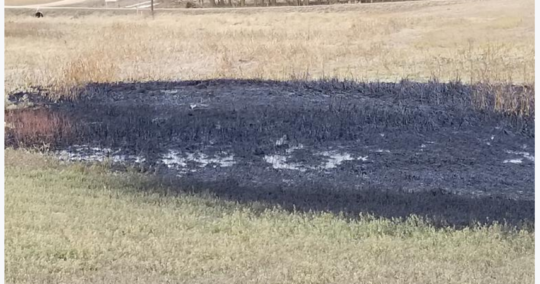
- CO2 is a toxic asphyxiant. A pipeline rupture can spread a lethal plume of CO2 over two miles, displacing oxygen.
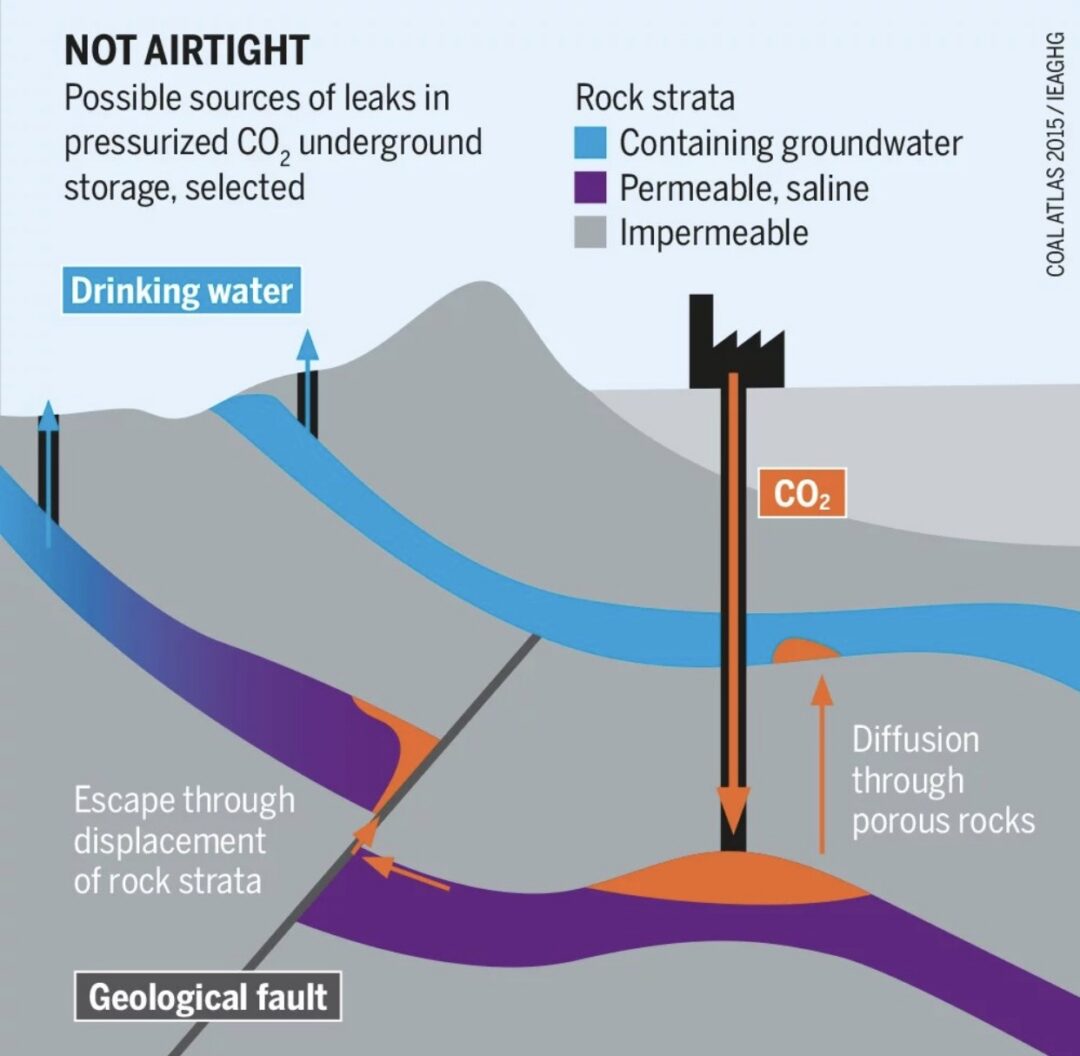
- CO2 can escape along injection or monitoring wells, abandoned wells, or through cracks in the caprock. There is no guarantee that CO2 can be permanently sequestered for hundreds of years without it leaking. If it leaks, it can contaminate drinking water with heavy metals.
- CCS increases water use by up to 55% for each capture site. Much of this is used for cooling
- Carbon capture requires 13-44% more energy, increasing electricity costs by 25-50%
- CCS requires tax credits (“45Q”) in order to be economically viable, equating to hundreds of billions of taxpayer dollars given away
Add your name ==> Don’t Let Nebraska Become a CO2 Waste Dump
Property Rights
In order for CO2 to be stored underground it is injected into “pore space,” which are microscopic pores in rock. Pore space is usually owned by the owner of the land above it. Normally, taking property for use as a waste disposal site would require use of eminent domain, which is allowed only for public use or benefit and requires just compensation determined by a judge. Rather than use eminent domain, the CO2 industry has lobbied states to enact laws that allow administrative agencies to force landowners to take CO2 into their pore space without condemnation with compensation based on whatever the agency considers to be equitable, thereby sidestepping the need to prove a public use and avoiding eminent domain procedural protections and standards.
Bold Alliance was an original signatory to a 2024 letter, “EPA Must Immediately Stop CO2 Injection Wells to Protect Public Safety and Drinking Water,” that calls on EPA to suspend permits for injecting carbon dioxide (CO2) underground, permitting of new CO2 injection wells, approval of primacy applications for CO2 injection wells, and to direct states with primacy over injection wells to halt injections and permitting of wells.
Our demands in the letter stemmed from:
1) multiple leaks of CO2 and equipment failures at the Archer Daniels Midland (ADM) facility in Decatur, Illinois;
2) new information about an increase in non-compliance violations in Texas Class II wells starting in 2011;
3) a higher percentage of Class II Texas CO2 injection wells that have failed one or more mechanical integrity tests when these wells are compared to other Class II wells; and
4) findings at EPA that steel used for well construction at the ADM site, and others around the country, is prone to corrosion in CO2 injection wells.
The events at the ADM facility have brought to light systemic problems with CCS technology and its regulation, raising serious concerns that CCS is neither safe nor viable. Reported failures at monitoring and detection systems due to corrosion and the migration of CO2 outside the intended storage zone expose multiple levels of failure. What is perhaps more concerning is that EPA has identified that injection wells around the country have the same design and material flaws that led to corrosion at at least one of ADM’s leaking wells, raising concerns that CO2 injection wells could very well be leaking significant quantities of CO2 into groundwater and the atmosphere.
Aquifer & Drinking Water Contamination
The threat to drinking water and public health posed by CO2 injection wells cannot be overstated given that leaks from the injection of CO2 into underground saline formations can migrate into overlying freshwater aquifers and be released into the atmosphere.
Once CO2 dissolves in water, it forms carbonic acid, which lowers the pH of the water, eroding and corroding rock and well equipment, and mobilizing toxic metals such as lead, arsenic, and mercury. These metals are particularly concerning for drinking water sources near injection sites.
CO2 Pipeline & Equipment Ruptures
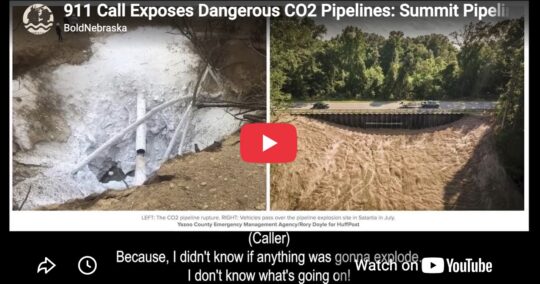
The release of CO2 into the atmosphere adversely impacts our climate. Even at relatively low concentrations, it can impair cognitive, cardiovascular, neurologic, hearing, and vision function through asphyxiation and toxicity as was, in part, demonstrated by a CO2 pipeline rupture in Satartia, Mississippi that sent dozens of people to the hospital and highlighted the challenges to first responders needing to respond to CO2 releases into the atmosphere.
Earthquakes
Another serious concern associated with CO2 sequestration is induced seismicity from injecting CO2 underground, which can cause fractures and re-activate faults, either of which can result in additional pathways for CO2 migration.
Scientists have expressed concern that injecting larger volumes of CO2, at higher pressures and for longer duration associated with CCS has an even higher probability of inducing earthquakes. But, U.S. EPA Class VI permitting does not address induced earthquakes.
Lack of Proper Regulation & Oversight
In combination with malfunctioning equipment, the injections can create unpredictable and widespread impacts from leaks on the water we drink and the air we breathe. EPA’s oversight of carbon dioxide injection wells is lacking in general, and is highlighted by the lack of transparency and oversight relating to these well failures.
These concerns are not limited to Class VI wells like the one operated by ADM, but extend to Class II wells, a much larger universe of thousands of potential injection sites across the country used to extract oil. The practice of injecting CO2 into these wells carries many of the same risks associated with Class VI wells used for CCS; however, the regulations governing Class II wells are less stringent, posing an even greater risk of leaks.
The risks associated with carbon capture and storage, particularly the injection of CO2 into Class II and Class VI wells, are too great to ignore. The recent events at the ADM facility in Decatur are a warning sign that current regulatory practices are inadequate.
Increased Energy Costs
Capturing, purifying, transporting, and injecting CO2 into underground pore space requires substantial energy. A majority of this energy is generated using conventional fossil fuel power plants. Capturing carbon requires 13-44% more energy than used by CO2 emitting facilities, and this increased energy demand increased operational costs by 25-50% but also results in substantial increased in conventional air pollution.
45Q Tax Credit for Carbon Capture is an $800 Billion Giveaway
A secret blank check that increases the federal deficit: The 45Q program is the financial lynchpin for all Carbon Capture and Storage projects. Without massive federal subsidies the carbon capture industry would collapse. Yet, Congress has not established a financial cap for this program, making it an unlimited tax dollar giveaway. Because this giveaway is in the form of a tax credit, all 45Q tax credit claims are made as part of tax returns making them secret. Not even Congress will know which companies and individuals are benefiting. Further, tax credit claimants can self-certify all of the data used to calculate how many dollars of credit they claim, but Congress has not required any federal agency to provide the detailed oversight of CO2 capture, movements, injections and withdrawals needed to prevent tax fraud. The Institute for Energy Economics and Financial Analysis studied announced CCS projects and found that, if all these projects are constructed, 45Q tax credit claims between now and 2042 would total approximately $835 billion. If Congress extends the 45Q tax credit to allow continued use of these facilities beyond their first 12 years of operation, the total call on federal dollars could be in the trillions.
Nebraska Seeking “Primacy” From U.S. EPA to Regulate CO2 Injection Wells
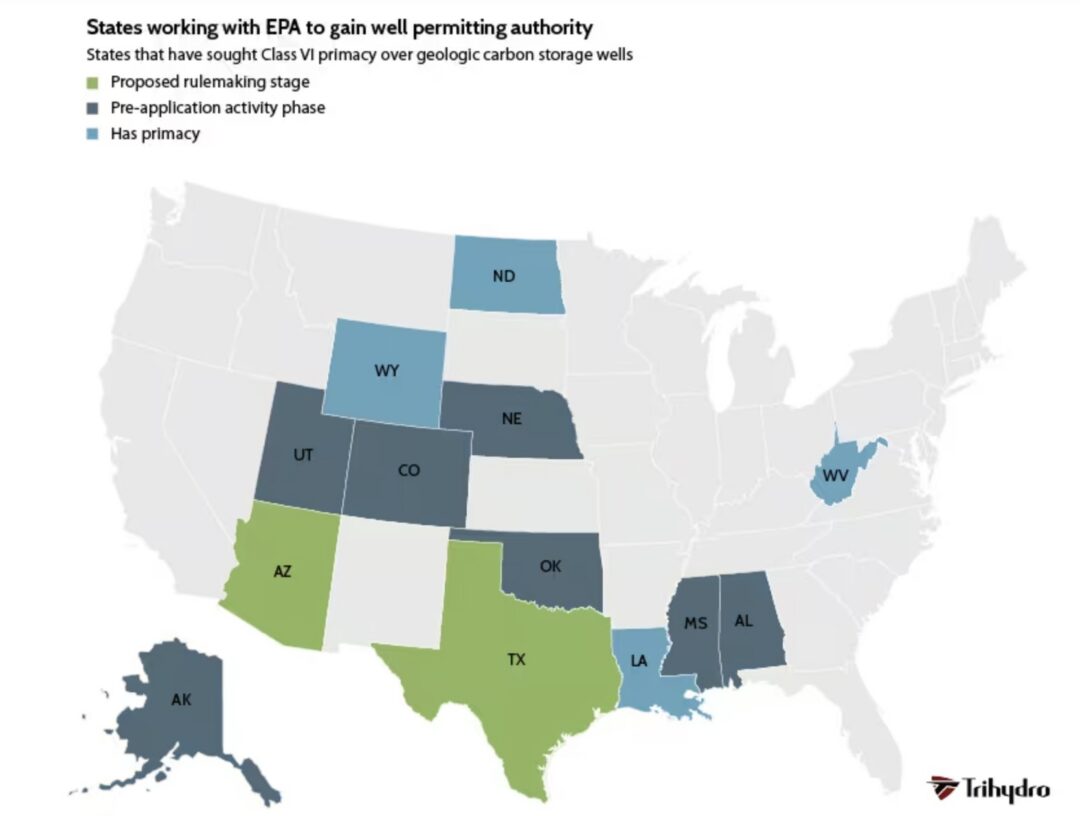
Nebraska has applied to the U.S. EPA to take over the regulation, including granting of permits and monitoring of CO2 injection wells in the state. If the EPA grants Nebraska’s application, that would mean the Nebraska Department of Water, Energy & Environment (DWEE NE) would instead be tasked with oversight of the entire process.
CO2 Threats to Nebraska: Aquifer Contamination
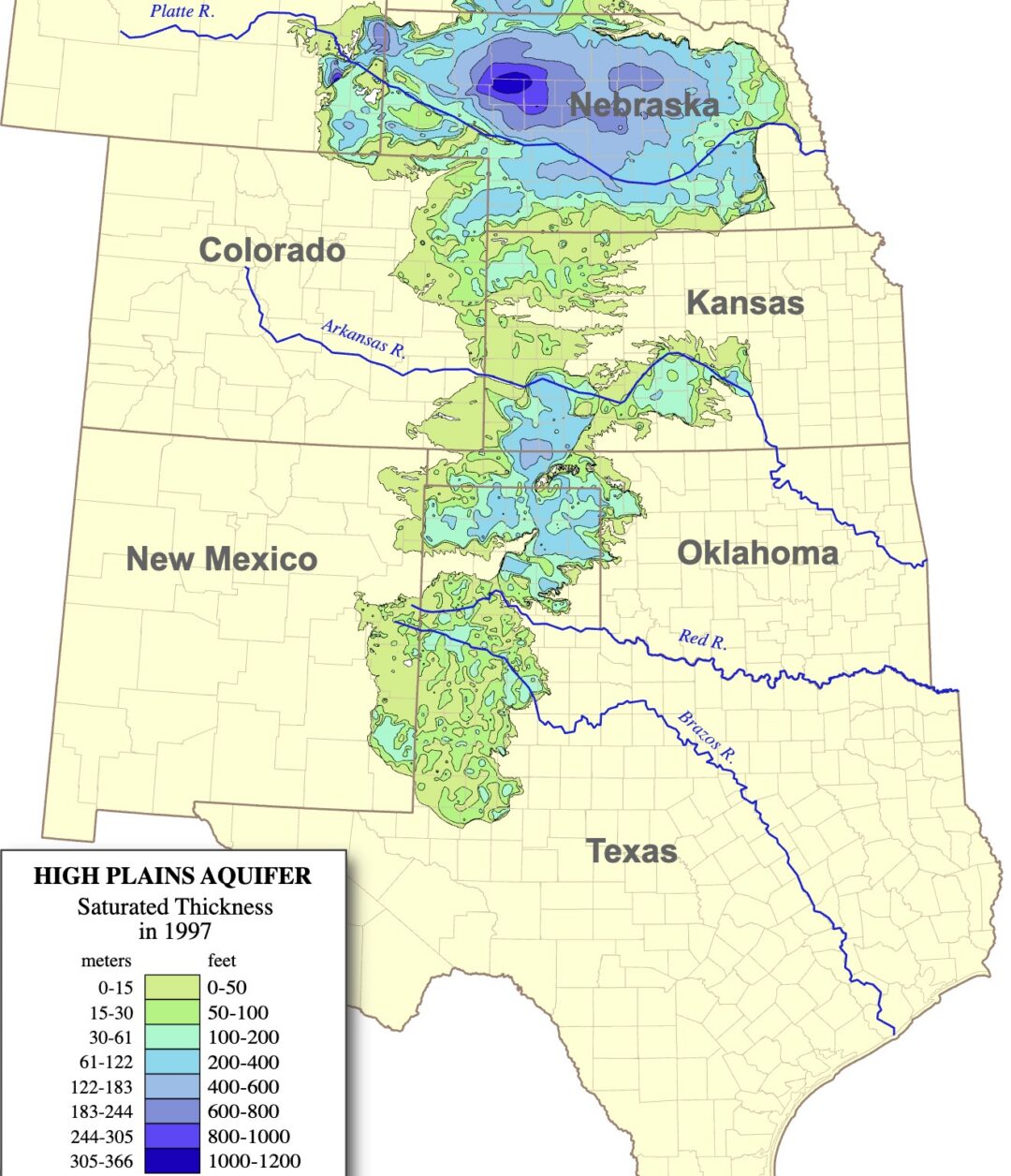
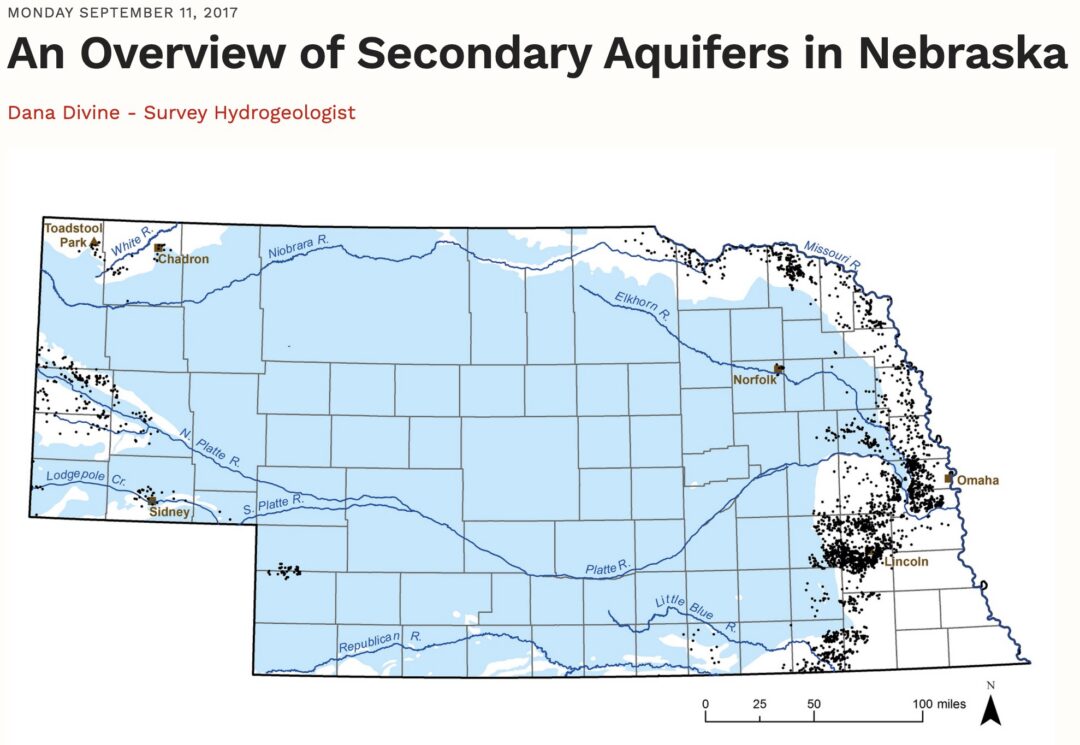
There are currently applications pending for carbon injection wells in some far western Nebraska panhandle counties, a location that also includes the High Plains Aquifer and secondary aquifers:
CO2 Threats to Nebraska: Earthquakes
University of Nebraska: Seismicity in Nebraska and adjacent states: The historical perspective and current trends
“A sudden spike in earthquake events has been observed in central Nebraska. Since April 2018, 26 earthquakes with equivalent moment magnitudes from 2.7 to 4.1 occurred, clustered tightly in Custer County. A similar cluster of 24 earthquakes with equivalent moment magnitudes from 2.6 to 3.7 occurred in Jewell County in northern Kansas in 2017. We have compiled an earthquake database for Nebraska and parts of adjacent states from different sources to determine whether these recent earthquake spikes are consistent with historic seismicity. We identified two historic earthquake clusters occurring in our study area. The first contained 32 events and was active in Red Willow County in southwestern Nebraska from 1977 to 1982. As it coincides spatially with the Sleepy Hollow oil field, it may be related to enhanced oil recovery from that field, although it is also located at the edge of the Chadron-Cambridge Arch. The second historical earthquake cluster is located in Pawnee and Richardson counties in southwestern Nebraska and includes eight earthquakes with equivalent moment magnitudes of 2.3 to 2.8 that occurred in a period from 1982 to 1989 over the Nemaha uplift and appear to be related to the Humboldt fault. We note an increase in both maximum magnitude, as well as in the cumulative seismic moment per cluster with time.”
Induced Earthquakes
Injection of CO2 also can induce earthquakes large enough to damage the wellbore or break the caprock. We know injecting produced water from oil and gas production far below groundwater or aquifers causes earthquakes:
- 5.2 M earthquake in TX in November 2023, the 4th largest in the state.
- At least 10 earthquakes occurred in OK on the same day in January 2024, the largest of which was 4.3.
Scientists have expressed concern that injecting larger volumes of CO2, at higher pressures and for longer duration associated with CCS has an even higher probability of inducing earthquakes. But, U.S. EPA Class VI permitting does not address induced earthquakes.
Abandoned wells – another path for leakage
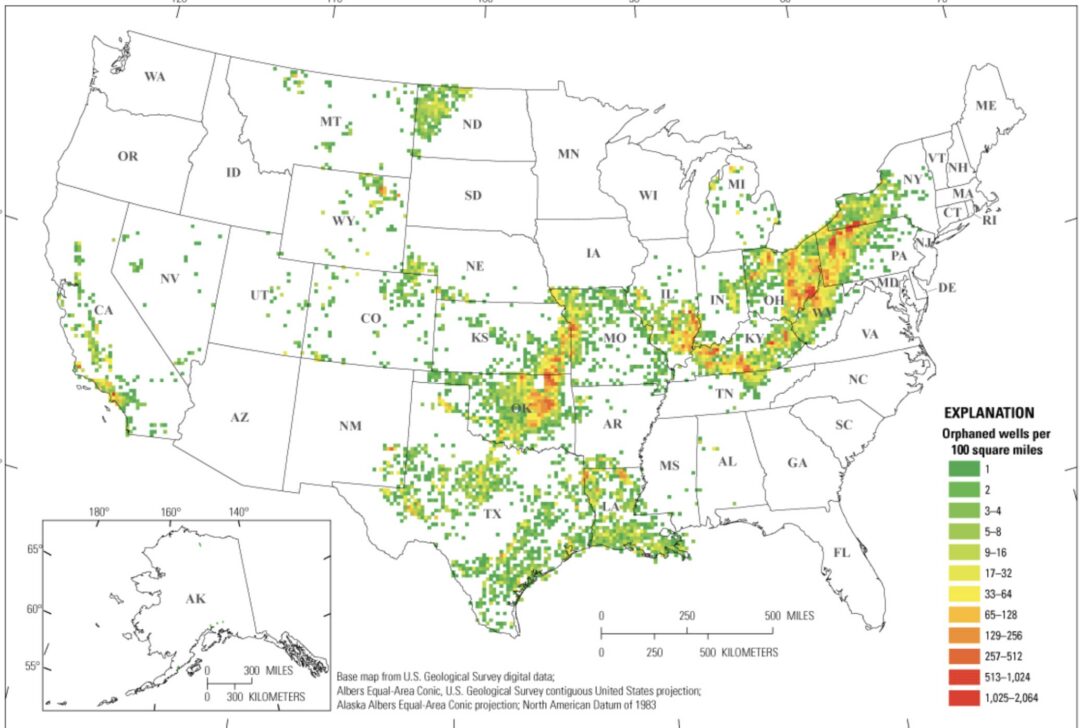
There are thousands of oil and gas wells across central and southern Illinois. This map shows only “orphaned wells” – unplugged wells – which total over 4,000. The Illinois Department of Natural Resources says they believe there are more than 32,000 oil & gas wells in Illinois, but acknowledges they don’t know where all of them are:
- Old wells can provide a pathway for CO2 to escape containment and rise to the surface.
- Even “plugged wells” are at risk – carbonic acid can erode cement.
An old well released CO2 near a Wyoming school in 2017, requiring evacuation & school shutdown for months.
Out of Sight, Out of Mind?
Supercritical CO2 is highly pressurized. Once injected underground, it moves both laterally and vertically, putting pressure on weak spots of the containment area.
We don’t have a lot of history to show success:
- It took 27 years before a CCS project in Norway began to leak and cause concern
- ADM has been sequestering CO2 for 12 years, but it is a small project storing an average of just 420,000 tons each year since 2016 (less than 1/2 of what was promised).
Projects in Illinois now being reviewed by the U.S. EPA are nearly 100 times the size of ADM’s Decatur project. One Earth Sequestration LLC’s application shows it’s project would be 23 times the size.
How can we be sure CO2 won’t leak? We can’t.