October 24, 2011, 3:31 PM

Pumpkins Persuaded Heineman

Malinda Frevert

News,

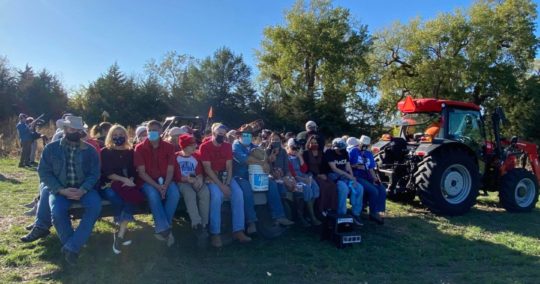
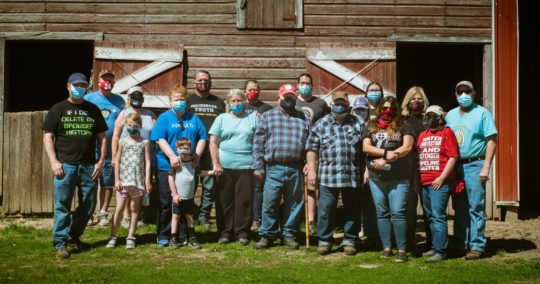
On Saturday, 200 citizens carved into pumpkins, "91 leaks and 0 regulations is scary. Call a special session Governor Heineman." Jane Kleeb stood with them in front of the Governor's Mansion and delivered this message:

And two days later, he did.

Comments

October 24th 2011

Mike Marvin - Congratulations. I am thrilled to see the session being called. Not all Labor supports the building of the pipeline. TWU and ATU representing the Transit workers in Omha and Lincoln do not support the pipeline, and as a TWU retiree I am pleased.

October 24th 2011

irene severin - Chill bumps (and not because it's almost Halloween)! I am so proud of the work Bold Nebraska has done on my behalf, on behalf of my children and my granddaughter, and on behalf of ALL Nebraskans! Thank you!

October 24th 2011

Maggie - The parade was delightful, and Jane, you were the perfect mixture of clarity, respectfulness, and gentle but firm articulation of Nebraska's needs. Thank you.

October 25th 2011

Justin H - You all need to do some real research and take a look at all the cities and gasoline tanks throughout the same area. Piipelines are the most enviromentally friendly/efficient means of transportation. This will create approx 100,000 jobs and generate 5.2 billion in tax revenue for the states it passes through. Proud Nebraskan and proud Pipeliner

October 25th 2011

Kim - 100,000 jobs Justin? Wow, I think you may want to do your research buddy..... TransCanada says 20,000 jobs, amazing how it just keeps changing every time we blink! I'd rather have clean water. Justin did you know that the 1st pipeline was manufactured in India? The 2nd would be too, it's just the way corporate greed works. They would rather venture out to a foreign country to pay workers well below their own minimum wage standards rather than giving those jobs to their own country or having it American made..... Just a thought, also, if you watched the 1011 news their representative said that it is environmentally disruptive and will disturb the land. I didn't put that in their mouth, that's what he said on the tele. Also, check out CNN's website. They have to change their blades and buckets every 12 hours when mining this crap because the tar sands is so corrosive. What do you think that will do to a steel pipe? You can't try to tell me that the concrete barrier won't have hairline cracks. Come on, we are all not that perfect. Why doesn't TransCanada just refine the crap in their own backyard? That's a good question.... oh wait, they would rather shove it down a pipeline and it waves goodbye to us as it will go to the gulf coast in Texas to a refinery... Oh did I just say coast? It will actually increase our gas prices here in the midwest because there will be an abundance of supply and it's just waving goodbye to us as it goes down to the coast. Do some research on the prices of gas too, I beleive Bold has a flyer you can read.

October 25th 2011

Ralph W - @Justin. For a good, well-researched overview of pipeline issues and news, look at http://keystonepiper.blogspot.com/p/keystone-basics.html

October 25th 2011

Linell - Justin--Gasoline is an entirely different substance in a pipeline or tank than tarsands oil. Also, in a tank, it is not moving as in a pipeline. Those gas and natural gas pipelines have regulations in our state, just as I do in my healthcare profession--reams of them, as well as mandated continual updating to maintain licensure. If you look around, there is always some service station/storage facility having to do maintenance on those tanks and lines, with appropriate "mitigation" when needed. Those regs don't exist in our state for the tarsands crude pipelines. That's why we are working to make this situation safer and better for all Nebraskans. Check out the CBS "60 Minutes" presentation on Canadian tar sands oil from a number of yrs ago, and the more recent Nat'l Geographic story. They are enlightening. Also note that the workers attending the State Dept. hearings were mostly not even from NE, or the midwest.

October 25th 2011

Malinda Frevert - Ralph, the blog is a great resource. Thanks for sharing!

October 25th 2011

Justin H - @Kim lets explore these points you bring up quickly. As far as the estimate of 20,000 jobs this is directly from pipeline construction and refining, however my personal estimate of 100,000 would also include even those indirectly affected such as mechanics(car, truck, equipment), Security Companies, Food Services, etc. There is alot more industries involved than just the pipeline and refineries. As far as the pipe going into the ground coming from India, yes I am aware of this. I was part of the REX and knew people that were part of this last line. I am with you and would rather see this pipe being made in the US, however one point you forgot was that India is one of the few countries with the capability to supply enough with lines that cover these many miles. The enviromental impact is something that has only just recently been talked about. I don't remember hearing too much about enviromental impact with the previous two lines when they were laid in Nebraska. I would like to know what long term impact there really has been. With the Enviromental rules and constant inspection, I have yet to see any of great concern. Water bodies, wetlands, etc are all ensured to be disturbed as little as possible through laying a line, knowing from personal experience on lines going through not only Nebraska, but many others. Corrosion.(http://climateinsight.wordpress.com/2011/09/10/keystone-xl-risks/) "As it stands, in their latest environmental review of Keystone XL, the Department of State’s pipeline experts have determined that the Keystone XL pipeline will have a leak due to pipeline corrosion once every 3,400 years".... Enough on that subject. The price of gas increasing. I dont know the facts on this, nor is it something I would care about either way. I would much rather pay higher gas prices if it meant reducing oil purchase from the countries that not only don't like us, but down right hate us. It would be well worth the few cents to get more from a "friendly" country. @Linell, the reason I bring up gas tanks and cities is because spills are bound to happen even with regulations and when it comes down to it, gasoline is capable of contaminating the aquifer much faster that crude oil. I do understand the concern, but look at the amount leaked from pipelines compared to tankers, or even super tankers. (transcanada.com) "80% of spills involve less than 50 barrels, and less than 0.5 percent of spills total more than 10,000 barrels." where a supertanker can hold 2 million barrels and I dont know the facts, but think about spilling 2 million barrels off in the atlantic because there isnt a pipeline to transport this oil. As far as those attending the State Dept. hearings, I know that I was not involved, but there were representatives from my local union there to represent all members of the union including myself and a large majority of those living along the xl route. They made the trip up from Tulsa, OK and made most meetings including the Atkinson and Lincoln meetings. I am sorry I was not able to be there to voice my opinion personally but unfortunately as a pipeliner I dont have vacation time or have the ability to take time off for these things if Im working, But again that is why I leave that in the hands of my union representatives. Overall, I can understand the concern and I have done personal research regarding this topic before I've made my decision. Im not asking you to change yours, but I am saying that many should look into these claims. One main point is leaks that have occured on phase I's line, Do you know how many came from the line itself and the ones that came from the stations along the line. Do yourself a favor and look into it.

October 25th 2011

Vicki Bumgarner - THANK YOU! Bold Nebraska and THANK YOU! Governor Heineman. I will pray that the session brings protections for our citizens and our invaluable natural resources.

October 25th 2011

Jay Olson - You can still create jobs. Just move the pipeline around the aquifer. Fight the good fight and Stand with Randy. The Aquifer is too important to risk.

October 27th 2011

Justin H - The funny thing is look at what has been allowed to go on over the aquifer and now that a pipeline that will bring jobs, money, and tax revenue in a safe and enviromentaly friendly way people want to stand together and protect it... sure it is worth protecting but stand against other construction that is more enviromentaly damning than this!

October 27th 2011

Malinda Frevert - Justin, 1st the job numbers you are using were paid for by TransCanada. The State Dept only estimates 5-6,000 temporary jobs and Cornell researchers predict even less. In fact, the pipeline might destroy more jobs than it creates: http://www.ilr.cornell.edu/globallaborinstitute/research/upload/GLI_KeystoneXL_Reportpdf.pdf Running a pipeline through the Sandhills is perhaps one of the most environmentally destructive ideas I can imagine. It has taken generations to work that land into a sustainable economy. Ripping off the delicate grass and running a pipeline through the high water table is a bad idea, period.

October 27th 2011

Justin H - @Malinda your 5-6000 jobs is horrible wrong, coming from personal experience of knowing what it takes to have just one spread go, compared to many doing almost 1700 miles of pipe, let alone the refining and other construction that comes with it. When one spread picks one(or multiple) places to warehouse from, every person on the spread is paying for little things like: Hotel, Camper Spots, Apartments, Vehicles(new and used purchases), Mechanics, Truck Rental, Equipment Rental, Car Rental, Gas, Gas Station Snacks, Plane tickets, public transportation, Food services, Restaurants, Movies, Casinos, Computers/new and repairs, Bars, Church Tithe, Windshield replacement, Tires, laundry and laundry services, Carwash, Supermarket purchases, Work Clothes, Dress Clothes, Welding machine Repair, Welding supplies, Tourism, Local tolls, State Taxes, Camper repair, Electronics, Kitchen wares, Doctors, and Dentists just to name a few. You cant tell me that towns which house these people that are spending money on local services wont have an increase in jobs as well. Who cares if they're temporary, at a time with unemployment being so high, any jobs are a blessing. As far as delicate grass(which is a word I have never heard describe grass of any kind) have you ever taken a look at a ROW after the pipes been laid. If it weren't for markers I would doubt you would be able to tell where the pipe lay at all. I've seen the process with my own eyes, and(as stated before) with the amount of Enviromental Inspectors, Enviromental rules and training of every employee through the process, I have my doubts to the real problem everyone who has never seen a pipeline have. And again, I didnt hear any complaints when the REX line went through or when Phase I went through, but some how now there is problem? Even if there were found hazards, I would much rather have a company that has the resources to fix anything found wrong then alot of the small time contractors that built the cities that sit on top of the aquifer. I have yet to see a real concern when it comes to this pipeline, and I have more experience and done just about the same amount of research. I hear you that moving the line sounds easy to anyone, but are you aware of the millions it would cost transcanada to move even the 100 miles it runs through the aquifer. I know you dont care what it costs them, but as Kim has stated she is worried about the price of the oil being sent down the pipeline. Who do you think will pay for the additional costs of shipping? All because of a few OVERREACTIONS to pipeline construction? Look for the truth to what you read before you believe it as fact. I've had a family member point out that phase I was said to have 1 leak per 7 years and it had 12 in the first year. Even if you account the same ratio with the estimates for the XL, your looking at 1 every 20 years. As I said before 100% of Phase I leaks where at stations, not the line itself, so even if you have 1 every 20 years, it would only be at one of the stations along the 1700 miles, which would make the average leak over the aquifer(if there are stations within that 100 miles through the aquifer) at 1 leak in 340 years. Thats with using protesters math, not the Department of State's math which says 1 leak per 1643 years, which over the aquifer would be 1 leak per 27,931 years.

October 28th 2011

Malinda Frevert - Justin, actually my 5-6000 number comes straight from the State Dept. And that's construction jobs, not total temporary jobs. While I appreciate that people need to work, I do not think a few thousand temporary jobs are worth risking people's livelihood for GENERATIONS. All the side work you mentioned will be gone after the construction workers leave. We can do better to builld sustainable rural communities. I have seen pictures of TransCanada's pipe in Montana that had massive soil cave ins, and I know landowners along Keystone 1 that had terrible washouts during the spring flooding. TransCanada has offered to cover 0 of those reclamation costs. I don't know why pumping station leaks are so discounted. They are STILL leaks. The pumping station near Stuart will be in the water every spring because the aquifer floods that field. So a leak at the pumping station will contaminate the aquifer there. An independent analysis by a UNL professor predicts 91 leaks along the KXL over a 50 year lifetime. Your math doesn't compute. You fail to mention that the statistics you're using are 1 leak per 1643 years PER MILE OF PIPELINE. If you calculate it out, that's nearly 1 leak per year.

October 28th 2011

Justin H - A boost to the economy, even temporary using is all it takes to get the money flowing within a town again. The Construction jobs may be limited to 5-6000 but what about inspection, enviromental, survey, safety, teamsters, lawyers, escort drivers, etc. not to mention the refining and construction on the refineries? Now Im getting tired of coming back everyday to repeat everything I've said, so for my final post I will go over you "leaks" math with you one last time. ‎"As it stands, in their latest environmental review of Keystone XL, the Department of State’s pipeline experts have determined that the Keystone XL pipeline will have a leak due to pipeline corrosion once every 3,400 years and a leak due to flooding and washout once every 87,600 years. State’s prediction that the proposed Keystone XL pipeline will have a leak due to “Materials and Construction” once every 3,300 years....." Thats approx 1 leak per 1643 years. Even if you want to personally expect that the projection is off like with phase I(84 times more) that would be 1 leak per 20 years for the whole XL. the XL is almost 1700 miles with 100 miles through the aquifer. assuming that the 100 miles has just has much chance as the rest(even though the type of pipe would actually make it less) then it would have 1/17th the possiblity of leaking in that 100 miles, which would be 1 per 340 years(332.512 years by exact numbers). again this is going off of worst case scenario, assuming the XL will act as phase I has. if you stay with just what the Department of State estimates, then that would be 1 per 1643 for the whole line, 1/17th chance it would be over the aquifer would be 1 per 27,931. How you got a per mile ratio from any of that I wouldnt have a clue. Im tired of repeating myself time and time again with facts available to anyone who would simply take the time to look them up. Every concern posted on here has been disproven and given correct information to back it up. As I said before I can appreciate the concern, but coming from uninformed people(all but Malinda seemed to have no real knowledge besides what has be distorted by fanatic activists) I take no stock in it.

October 29th 2011

Malinda Frevert - Since Justin's decided to depart, I'll address the group: this math still does not make sense. Just because Keystone 1's leaked 84x more in one year than they predicted over the life of the pipeline, doesn't mean you multiply everything by 84. If you want an accurate analysis of spill predictions based on sound math, please read Dr. Stansbury's report: http://www.boldnebraska.org/transcanada_worstcase. As far as jobs, how many jobs are still in Nebraska for Keystone 1? Most of those communities saw little sustained economic growth because the construction crews came in and left, leaving nothing but a dirty tar sands pipeline behind. Our ranchers, farmers, small towns, and kids deserve better.

October 31st 2011

Kim - Thank you Malinda for clearing that up. This is a perfect example of how TransCanada questions our own integrity and our families well beings. I feel as if our own concerns were ignored throughout this process as TransCanada’s profits are protected. The citizens should not be responsible for regulating pipelines, hiring out their own consultants to issue an un-biased valid Environmental Impact Statement, and go to the ridiculous expense of having to hire attorneys to protect our aquifer, land, crops, animals, health, etc. Owning property has always been the American dream. Keystone XL is proven to have a high frequency of spills according to their own biased EIS. This can affect not just the value of a property, but the sentimental value that families hold over that American dream. We were also told by TransCanada that when the pipeline is abandoned it becomes the landowner’s responsibility. TransCanada is given more rights than the landowners, which is unfair and angers me as a resident in the state of Nebraska.

comments powered by Disqus